What is Guru Purnima? Its Spiritual Significance
Across India’s rich spiritual heritage, few observances hold as much reverence as Guru Purnima. Celebrated on the full moon (Purnima) of the Hindu month of Ashadha, this sacred occasion is dedicated to expressing gratitude towards gurus—teachers, mentors, spiritual guides, and all those who illuminate the path of knowledge.
But what is Guru Purnima, and why has it been celebrated for centuries?
For seekers of wisdom, Guru Purnima is more than a festival. It is a reminder that true knowledge transforms not only the intellect but also one’s character and spiritual understanding. In the Vedic tradition, a guru is regarded as someone who dispels ignorance and helps a disciple progress toward self-realization.
Whether you follow Vedic astrology, Sanatana Dharma, yoga, meditation, or simply value lifelong learning, understanding Guru Purnima offers deeper insight into one of India’s most meaningful spiritual traditions.
What is Guru Purnima?
Guru Purnima is a sacred festival dedicated to honoring teachers, spiritual masters, mentors, and guides who contribute to an individual’s intellectual, ethical, and spiritual growth.
The celebration falls on the full moon day (Purnima) in the Hindu lunar month of Ashadha, typically occurring in June or July according to the Gregorian calendar.
Traditionally, Guru Purnima is observed by:
- Offering respect to one’s guru
- Expressing gratitude for knowledge received
- Studying sacred texts
- Practicing meditation and prayer
- Reflecting on personal growth
- Performing acts of service (Seva)
Guru Purnima Meaning
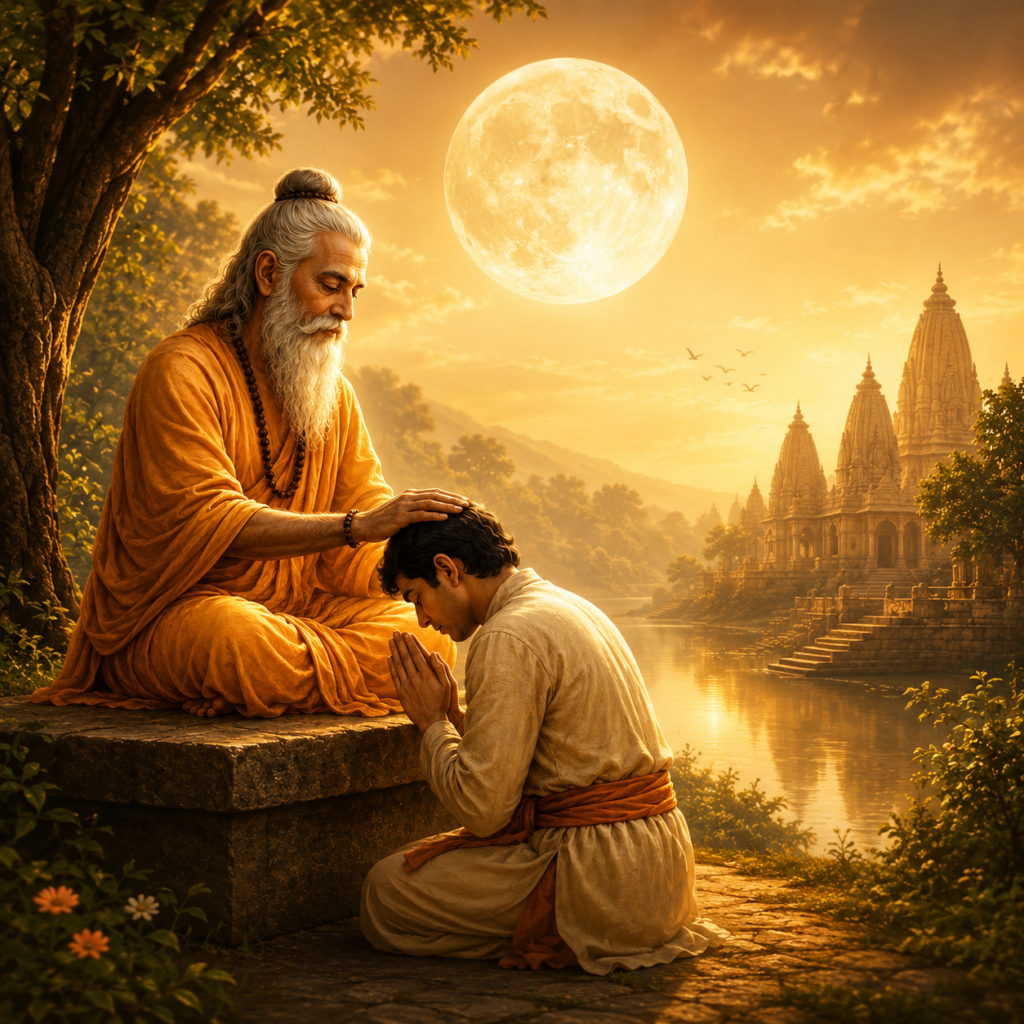
Understanding the Guru Purnima Meaning begins with the word Guru itself.
In Sanskrit:
- Gu means darkness or ignorance.
- Ru means remover or dispeller.
Thus, a Guru is traditionally understood as “one who removes the darkness of ignorance through knowledge and wisdom.”
The word Purnima means full moon, symbolizing completeness, clarity, and illumination.
Together, Guru Purnima represents a day devoted to honoring those who guide others toward greater understanding, wisdom, and spiritual awareness.
Buddhist Tradition
Guru Purnima also holds importance in Buddhism.
According to Buddhist tradition, Lord Buddha delivered his first sermon at Sarnath after attaining enlightenment around this time, beginning the teaching of the Dharma.
This association highlights Guru Purnima as a day dedicated to sharing wisdom and compassion.
Jain Tradition
In Jainism, Guru Purnima is connected with Lord Mahavira and his first disciple, emphasizing respect for spiritual teachers and disciplined learning.
Although customs vary, the central theme of honoring the teacher remains consistent.
Guru Purnima in the Vedic Tradition
The Guru Purnima Vedic Tradition places immense importance on the relationship between a guru and disciple.
Ancient Vedic education took place primarily in Gurukuls, where students lived with their teacher, learning not only scriptures but also ethics, discipline, practical skills, and spiritual values.
Education in the Gurukul system focused on developing the whole individual through:
- Knowledge
- Character
- Responsibility
- Self-discipline
- Service
- Respect for nature
- Spiritual understanding
Guru Purnima became an occasion for students to express gratitude and renew their commitment to learning.
Why Guru Purnima is Celebrated ?
Many people ask, “Why Guru Purnima is Celebrated?”
The festival is observed for several meaningful reasons.
To Express Gratitude
The day encourages disciples and students to thank those who have guided them through education, mentorship, or spiritual instruction.
To Preserve Knowledge
India’s spiritual traditions have been passed from one generation to another through oral teaching and personal guidance.
To Deepen Spiritual Practice
Meditation, chanting, scriptural study, and acts of service are commonly performed on Guru Purnima as ways of strengthening one’s spiritual discipline.
The Spiritual Significance of Guru Purnima
The Spiritual Significance of Guru Purnima extends beyond honoring an individual teacher.
It reminds us that wisdom has the power to transform lives.
In Hindu philosophy, ignorance (Avidya) is often viewed as the root cause of suffering, while knowledge (Vidya) leads toward clarity and liberation.
A guru symbolizes guidance through this journey.
Spiritually, Guru Purnima encourages individuals to cultivate:
- Humility
- Gratitude
- Self-awareness
- Compassion
- Discipline
- Faith
- Lifelong learning
Guru Purnima and the Guru-Disciple Relationship
One of the defining features of Indian spirituality is the Guru-Disciple Relationship.
Unlike a purely academic teacher-student relationship, the traditional guru-disciple bond emphasizes trust, respect, discipline, and transformation.
Qualities of a Guru
According to traditional teachings, a guru may:
- Share knowledge responsibly.
- Encourage ethical living.
- Guide spiritual practice.
- Inspire independent thinking.
- Support the student’s personal development.
Responsibilities of a Disciple
Similarly, a disciple is encouraged to cultivate:
- Respect
- Sincerity
- Patience
- Humility
- Commitment to learning
- Ethical conduct
This relationship is viewed as mutually enriching, with both teacher and student dedicated to the pursuit of wisdom.
Traditional Practices on Guru Purnima
Many people observe Guru Purnima through simple yet meaningful practices.
These may include:
- Offering flowers to the guru.
- Performing Guru Vandana.
- Lighting a lamp.
- Chanting spiritual mantras.
- Reading scriptures.
- Spending time in self-reflection.
- Practicing meditation.
- Expressing gratitude to mentors.
- Donating food, books, or clothing.
- Volunteering in community service.
The emphasis is on sincerity rather than elaborate rituals.
Learn more about the history of Guru Prunima 2026 Jnana Maha Homam
https://www.sahasrararituals.in/remedial-services/guru-purnima-2026-jnana-maha-homam