Lalita Saptami 2026: Significance, Puja, Vrat, Rituals & Spiritual Importance
What is Lalita Saptami?
Lalita Saptami 2026 is a sacred Hindu observance traditionally associated with Lalita Devi, who is revered in different Vaishnava and regional traditions as an important companion of Sri Radha and a prominent figure in the devotional traditions of Vrindavan and Braj.
Lalita Saptami is observed on Shukla Paksha Saptami, the seventh lunar day of the waxing Moon, during the Hindu month of Bhadrapada.
The day is particularly meaningful in traditions connected with Radha-Krishna Bhakti. Devotees remember Lalita Devi, offer prayers, observe fasting according to their tradition, and reflect on the ideals of devotion, service, friendship, loyalty, and spiritual dedication.
Lalita Devi is traditionally described as one of the Ashta Sakhis, the eight principal companions of Sri Radha. Within Gaudiya Vaishnava devotional literature and Braj traditions, she is especially known for her strong devotional personality and her dedicated service to Radha and Krishna.
For devotees, Lalita Saptami is therefore not simply a festival marked by external rituals. It is an opportunity to contemplate selfless devotion, loving service, spiritual friendship, and dedication to the Divine.
Lalita Saptami 2026 Date
Lalita Saptami is determined according to the lunar calendar, specifically the Saptami Tithi during Shukla Paksha in the month of Bhadrapada.
In 2026, Lalita Saptami is observed in September.
Because Hindu festival dates and Tithi timings can vary slightly according to location and Panchang calculation, devotees should verify the exact local Lalita Saptami 2026 date and Puja Muhurat using a reliable Panchang for their city.
The festival is particularly observed in places associated with Radha-Krishna devotion, including Vrindavan, Barsana, and other areas of Braj.
Why does the date change every year?
Unlike festivals based on the Gregorian calendar, many Hindu festivals are determined using the lunar calendar.
The beginning and ending of a Tithi are calculated based on the relative positions of the Sun and Moon.
Therefore, the Gregorian date of Lalita Saptami changes from year to year.
Lalita Saptami Meaning
To understand the Lalita Saptami Meaning, it is useful to understand both parts of the name.
Lalita
Lalita refers to Lalita Devi, traditionally regarded as one of Sri Radha’s principal companions.
She is particularly prominent in the devotional traditions of Braj and Gaudiya Vaishnavism.
Saptami
Saptami means the seventh lunar day.
Thus, Lalita Saptami refers to the sacred observance of Lalita Devi on the Saptami Tithi of the waxing lunar fortnight in Bhadrapada.
The day is traditionally dedicated to remembering her devotional qualities and her service to Radha and Krishna.
Who is Lalita Devi?
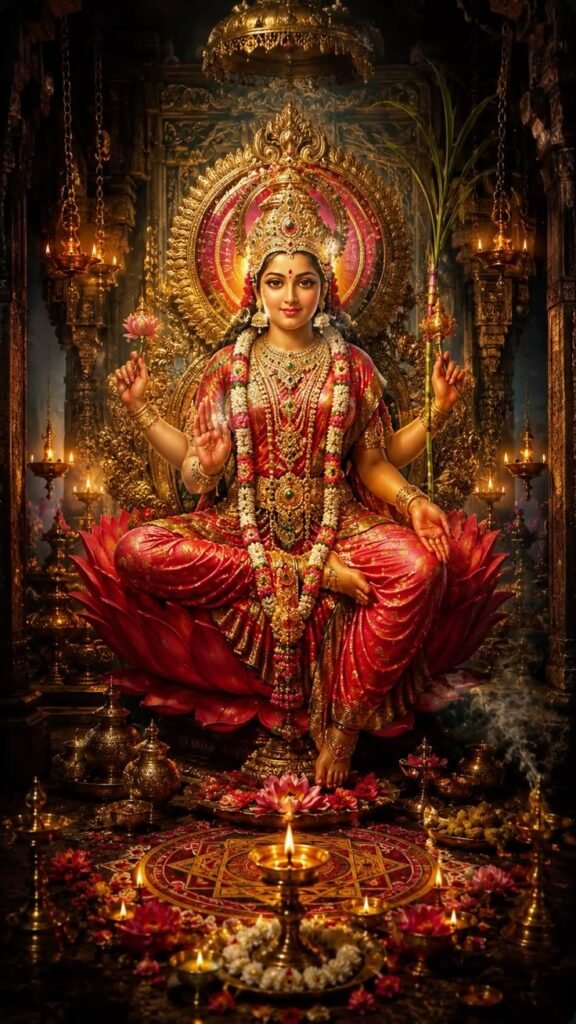
Lalita Devi occupies an important position in Radha-Krishna devotional traditions. She is traditionally described as one of the eight principal Gopis, known as the Ashta Sakhis. The eight principal companions are commonly identified as:
- Lalita
- Vishakha
- Chitra
- Champakalata
- Tungavidya
- Indulekha
- Rangadevi
- Sudevi
Among them, Lalita is especially prominent in many devotional texts and traditions.
Her personality is often portrayed as confident, direct, protective, and intensely devoted.
Lalita Saptami Significance
The Lalita Saptami Significance is primarily rooted in devotion to Lalita Devi and the wider Radha-Krishna Bhakti tradition.
The observance encourages devotees to contemplate several spiritual values.
1. Selfless Devotion
Lalita Devi is remembered for her dedication to Radha and Krishna.
Her example is traditionally understood as a form of devotion that focuses on service rather than personal recognition.
2. Spiritual Friendship
The relationship between Lalita Devi and Sri Radha represents an ideal of deep spiritual companionship within devotional traditions.
The festival can therefore encourage people to reflect on the importance of supportive and sincere relationships.
3. Service as Spiritual Practice
Lalita Devi’s role is closely connected with service.
This highlights the traditional Bhakti principle that serving the Divine and supporting fellow devotees can itself become a spiritual practice.
4. Loyalty and Dedication
Lalita is traditionally portrayed as unwavering in her devotion.
Her character can inspire devotees to remain sincere in their spiritual commitments.
5. Radha-Krishna Bhakti
Lalita Saptami provides an opportunity for devotees to deepen their understanding of the devotional relationship between Radha and Krishna.
Lalita Saptami Spiritual Significance
The Lalita Saptami Spiritual Significance goes beyond simply observing a particular date.
At a deeper level, the day can be understood as an invitation to cultivate Bhakti, or loving devotion.
In many Bhakti traditions, spiritual life is not limited to meditation or ritual.
It also involves:
- Service
- Compassion
- Humility
- Friendship
- Sincerity
- Faith
- Gratitude
- Self-discipline
Lalita Devi’s traditional example emphasizes the importance of serving others with devotion.
For a spiritual seeker, this can lead to an important question:
How can devotion become part of everyday life rather than remaining limited to a festival?
Helping someone without expecting recognition, supporting family members, serving one’s community, or performing responsibilities sincerely can all become opportunities for reflection on the principle of Seva.
Why is Lalita Saptami Celebrated?
The primary reason Lalita Saptami is celebrated is to honor Lalita Devi and remember her devotional relationship with Sri Radha and Krishna.
Devotees may observe the day through:
- Lalita Devi Puja
- Radha-Krishna worship
- Fasting
- Bhajans
- Kirtans
- Temple visits
- Reading devotional literature
- Offering flowers
- Preparing Naivedyam
- Charity and Seva
The exact form of observance varies according to one’s religious tradition.
In Braj, the festival has particular devotional importance because of the region’s strong association with Radha-Krishna worship.
Lalita Saptami Rituals
The Lalita Saptami Rituals differ according to region and devotional tradition.
Common practices may include:
Fasting: Some devotees observe a Lalita Saptami Vrat.
Temple Visits: Devotees may visit Radha-Krishna temples or temples dedicated to Lalita Devi.
Bhajan and Kirtan: Devotional singing is an important part of many Vaishnava traditions.
Scripture Reading: Devotees may read or listen to traditional devotional literature related to Radha, Krishna, and the Gopis.
Flower Offerings: Flowers are offered as an expression of devotion.
Naivedyam: Traditional vegetarian food and sweets may be offered.
Charity: Some devotees use the occasion to perform Seva or charitable activities.
Lalita Saptami Vrat
Lalita Saptami Vrat refers to the devotional fasting or observance undertaken by some devotees on this day.
Fasting practices can differ significantly.
Some devotees may observe:
- Complete fasting
- Fruit-based fasting
- Milk-based fasting
- A single vegetarian meal
- Restrictions on particular foods
There is no need for everyone to follow the same fasting method.
The spiritual purpose of a Vrat is traditionally connected with discipline, devotion, restraint, and focused remembrance of the Divine.
Important Health Consideration
Fasting should be appropriate for an individual’s health.
Children, elderly people, pregnant women, people with medical conditions, and those taking medication should not undertake restrictive fasting without appropriate professional guidance.
Spiritual practice should not require a person to compromise their health.
Lalita Saptami Benefits
The Lalita Saptami Benefits are traditionally understood in spiritual and devotional terms.
Devotees may associate the observance with:
Strengthening Devotion
Remembering Lalita Devi can deepen one’s connection with Radha-Krishna Bhakti.
Developing Humility
Lalita Devi’s traditional role emphasizes service and dedication.
Encouraging Seva
The festival can inspire people to serve others without expecting recognition.
Cultivating Gratitude
Devotional prayer encourages reflection on the people and circumstances for which one is grateful.
Strengthening Spiritual Discipline
Observing a Vrat or daily prayer can encourage consistency.
Encouraging Positive Relationships
The devotional friendship between Lalita and Radha can inspire reflection on loyalty, support, and sincere companionship.
These are traditional spiritual interpretations, not scientifically guaranteed results.
Lalita Saptami should not be presented as a guaranteed method for obtaining wealth, marriage, health, career success, or removal of specific problems.
Lalita Saptami and Vedic Astrology
Lalita Saptami is primarily a religious and devotional observance, rather than an astrological remedy by itself.
From a Panchanga perspective, the date is determined through the lunar Tithi.
Traditional Jyotisha places importance on:
- Tithi
- Vara
- Nakshatra
- Yoga
- Karana
- Sunrise and sunset
- Local geographical calculations
These factors are used to determine the appropriate timing of many Hindu observances.
Some practitioners may recommend devotional practices based on a person’s horoscope. However, such recommendations should be made only after considering the complete birth chart rather than assuming that a particular festival automatically serves as a remedy for every individual.
Traditional astrology and spiritual practice should also be distinguished from scientific claims.
There is no established scientific evidence that observing Lalita Saptami guarantees a specific change in planetary influences or future events.
Learn more about the of Lalita Saptami 2026 Special Rituals:
https://www.sahasrararituals.in/remedial-services/lalita-saptami-2026-lalita-sahasranama-homam