Vamana Jayanti 2026: Date, Timings, Significance, Puja & Rituals
Vamana Jayanti 2026 is an important Vaishnava observance dedicated to Lord Vamana, the fifth incarnation of Lord Vishnu in the traditional Dashavatara sequence. The festival commemorates the appearance of Lord Vishnu as Vamana, a divine form associated with humility, righteousness, devotion, and the restoration of cosmic balance.
Vamana Jayanti is observed on Shukla Paksha Dwadashi in the month of Bhadrapada. In 2026, Vamana Jayanti falls on Wednesday, September 23, 2026. The Dwadashi Tithi begins on September 22 at approximately 9:43 PM and ends on September 23 at approximately 10:50 PM in the Chennai/Tamil Nadu Panchang calculations.
The festival is closely connected with the well-known story of King Mahabali and Vamana, in which Lord Vishnu appears in the form of a young Brahmin dwarf and asks King Bali for three steps of land. The story carries profound spiritual themes about humility, generosity, devotion, surrender, and the proper use of power. For devotees, Vamana Jayanti is more than a religious celebration. It is an opportunity to reflect on how humility and righteousness can guide human life.
When is Vamana Jayanti 2026?
Vamana Jayanti 2026 will be observed on Wednesday, September 23, 2026.
According to Panchang calculations:
- Date: Wednesday, September 23, 2026
- Tithi: Bhadrapada Shukla Dwadashi
- Dwadashi Begins: September 22, 2026, around 9:43 PM
- Dwadashi Ends: September 23, 2026, around 10:50 PM
- Nakshatra: Shravana until approximately 9:09 AM, followed by Dhanishtha
- Deity: Lord Vamana, an incarnation of Lord Vishnu
The same date is also observed as Vamana Dwadashi in Vaishnava traditions. Because Panchang timings can vary slightly by location, devotees should check a local Panchang before following a specific fasting or ritual schedule.
Vamana Jayanti 2026 Timings in Chennai
For Chennai, the Panchang for September 23, 2026 shows:
- Sunrise: Approximately 5:57–6:01 AM
- Sunset: Approximately 6:01–6:04 PM
- Dwadashi: Until approximately 10:50 PM
- Shravana Nakshatra: Until approximately 9:09 AM
- Rahu Kalam: Approximately 12:01 PM–1:31 PM
Different Panchang systems may show small variations in sunrise and other calculations. Therefore, these timings should be treated as local reference timings rather than a universal Muhurat.
What is Vamana Jayanti?
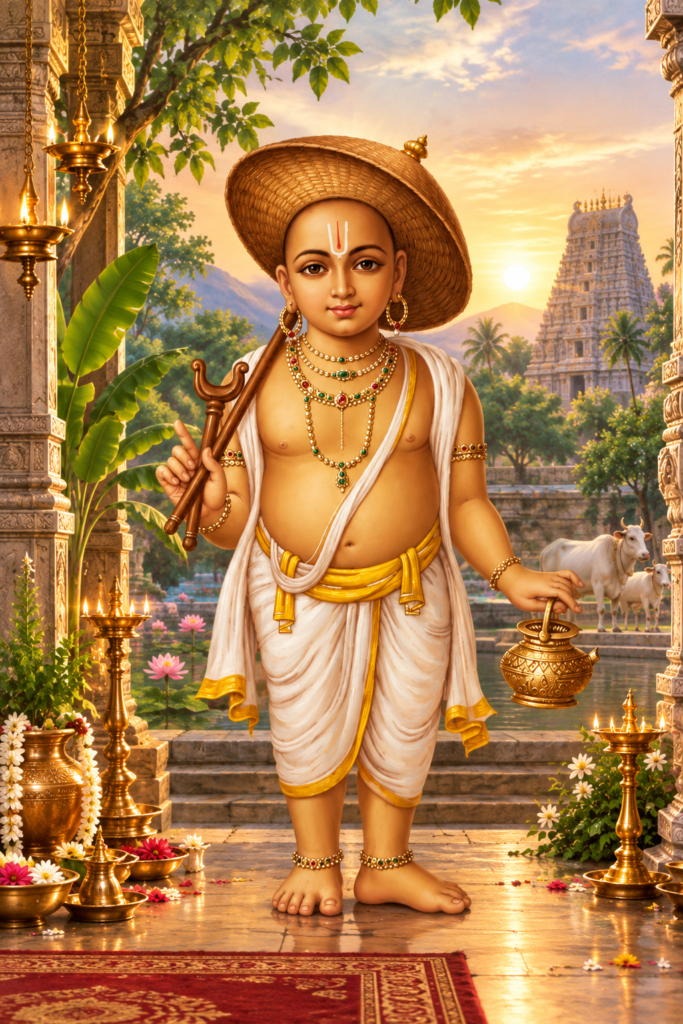
Vamana Jayanti is the sacred observance commemorating the appearance of Lord Vamana, one of the Dashavatara of Lord Vishnu.
According to traditional Hindu scriptures, Vamana appeared as the son of Sage Kashyapa and Goddess Aditi. He manifested in the form of a young Brahmin and approached the powerful Asura king Mahabali, who was known for his generosity and charitable nature.
Lord Vamana asked Mahabali for only three paces of land.
Although the request appeared extremely small, Vamana then assumed a cosmic form. With one step, He covered the Earth; with the second, He covered the heavens. Having nowhere remaining for the third step, Mahabali offered his own head.
This story is traditionally understood as a powerful lesson about devotion, humility, generosity, ego, and surrender to the Divine.
Who is Lord Vamana?
Lord Vamana is traditionally regarded as the fifth Avatar of Lord Vishnu.
The Dashavatara sequence commonly begins with:
- Matsya
- Kurma
- Varaha
- Narasimha
- Vamana
- Parashurama
- Rama
- Krishna
- Buddha or Balarama, depending on tradition
- Kalki
Traditional Vaishnava sources describe Vamana as the first human-form incarnation in this sequence after the earlier animal and half-animal forms.
Vamana is often depicted as a youthful Brahmin carrying a kamandalu, umbrella, and staff. His simple appearance contrasts with the immense cosmic power revealed later in the story.
This contrast is one of the central spiritual ideas associated with Vamana: greatness does not always appear outwardly as power or grandeur.
Vamana Jayanti and the Story of King Mahabali
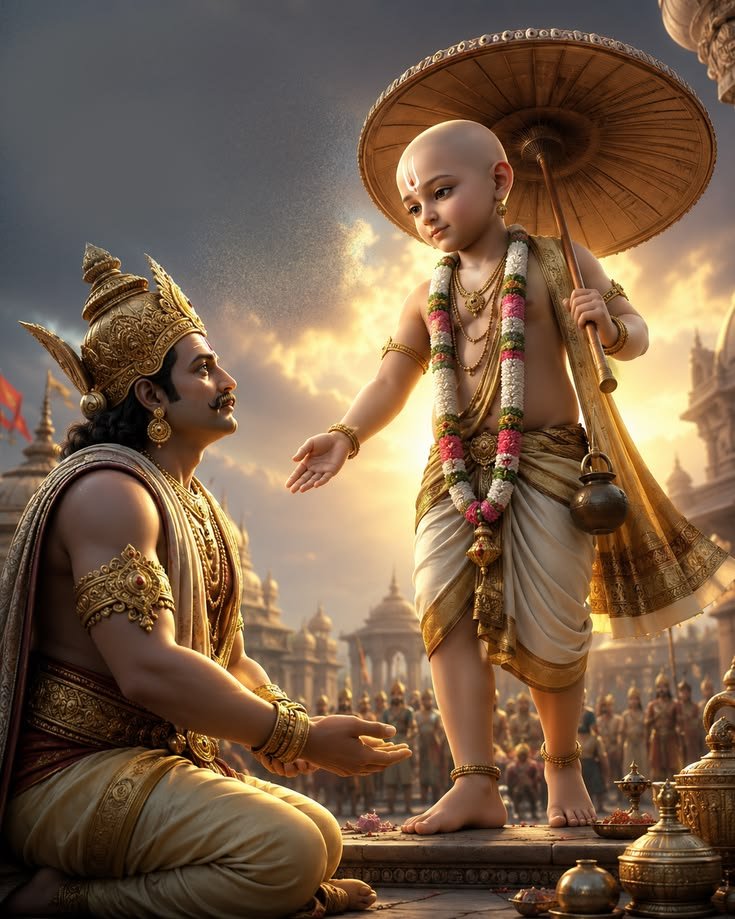
The story of Vamana and Mahabali is one of the most meaningful narratives associated with Lord Vishnu.
King Mahabali was a powerful ruler belonging to the Asura lineage. Traditional texts describe him as generous, devoted to his people, and highly accomplished. Through his strength and spiritual discipline, he became extremely powerful.
The Devas became concerned about the growing influence of Mahabali. Lord Vishnu then appeared as Vamana.
When Vamana approached Mahabali during a ritual, the king respectfully welcomed Him and offered to grant whatever He requested.
Vamana asked for only three paces of land.
Mahabali agreed.
Vamana then expanded into a cosmic form known as Trivikrama. His first step covered the Earth, and His second step covered the heavens. There was no place left for the third step.
Mahabali understood the divine nature of the event and offered his own head for the final step.
The story is traditionally interpreted not simply as the defeat of a powerful king, but as a lesson in surrender and spiritual humility.
What is the Spiritual Meaning of Vamana Jayanti?
The Vamana Jayanti significance extends beyond the historical or mythological narrative. The festival encourages devotees to reflect on several important spiritual values.
1. Humility
Vamana appears in a small and simple form despite being an incarnation of Lord Vishnu.
This reminds devotees that external appearance does not determine spiritual greatness.
2. Surrender
Mahabali eventually recognizes the divine nature of Vamana and surrenders himself.
This represents the spiritual principle of surrendering the ego before the Divine.
3. Generosity
Mahabali’s willingness to give is an important part of the story.
Vamana Jayanti encourages devotees to cultivate generosity while also understanding that charity should be accompanied by wisdom and humility.
4. Dharma
The story is traditionally associated with the restoration of balance and the protection of dharma.
For devotees, this can inspire reflection on righteous conduct in personal, professional, and family life.
5. Control of Ego
The story can also be understood as a reminder that power, wealth, influence, and achievements are temporary.
Spiritual growth requires recognizing the limitations of worldly pride.
Vamana Jayanti Significance in Hindu Tradition
Vamana Jayanti has special importance in Vaishnava traditions because it commemorates one of Lord Vishnu’s Dashavatara.
The festival provides an opportunity to worship Vishnu and remember His Vamana form.
The observance is traditionally associated with:
- Vishnu Bhakti
- Dharma and righteousness
- Humility
- Charity
- Self-discipline
- Devotion
- Surrender
- Spiritual reflection
Some traditions also connect Vamana Jayanti with Onam, particularly in Kerala, where the story of Vamana and Mahabali has an important cultural and religious presence. Vamana Jayanti and Onam both occur within the same general festival period in 2026, with Vamana Jayanti observed on September 23.
Vamana Jayanti Benefits
The phrase Vamana Jayanti Benefits generally refers to the traditional spiritual benefits associated with observing the festival.
According to devotional traditions, sincere observance may support:
Spiritual Discipline
Fasting, prayer, mantra chanting, and scripture reading encourage self-discipline.
Greater Awareness of Dharma
The story of Vamana encourages devotees to think about righteousness and responsible use of power.
Cultivation of Humility
The Vamana narrative reminds people that greatness is not always connected with external status.
Practice of Charity
Giving food, clothing, or other appropriate support to people in need can turn religious observance into meaningful service.
Devotional Growth
Regular remembrance of Vishnu can strengthen one’s connection with Vaishnava devotional practices.
These are traditional spiritual beliefs, not scientifically established guarantees. Vamana Jayanti should therefore be approached as a religious and devotional observance rather than as a guaranteed method for achieving a particular worldly outcome.
Vamana Jayanti and Vedic Astrology
From a Vedic astrology perspective, festivals dedicated to Lord Vishnu can be used as occasions for spiritual discipline, prayer, and reflection.
However, it is important not to make unsupported claims that observing Vamana Jayanti will automatically change a person’s horoscope, remove every planetary difficulty, or guarantee financial or personal success.
Astrology belongs to a traditional spiritual framework, while astronomical calculations and modern scientific observations belong to different disciplines.
For those who follow Vedic astrology, Vamana Jayanti can nevertheless be used as an opportunity to cultivate:
- Dharma
- Self-discipline
- Gratitude
- Charity
- Devotion
- Ethical conduct
- Inner balance
Personal spiritual practices should be chosen according to one’s beliefs and, where relevant, guidance from a knowledgeable practitioner.
Learn more about the of Vamana Jayanti 2026 Special Rituals:
https://www.sahasrararituals.in/remedial-services/vamana-jayanti-2026-sri-vamana-maha-homam