Aadi Pooram 2026: Date, Significance, Puja, Rituals & Benefits
Aadi Pooram is one of the most important devotional festivals observed during the Tamil month of Aadi. It is especially associated with Goddess Andal, the revered Vaishnava saint-poet and devotee of Lord Vishnu. For devotees across Tamil Nadu and other parts of South India, Aadi Pooram is a day of devotion, celebration, music, temple worship, and remembrance of Andal’s deep love for the Divine.
The festival is observed when the Pooram (Purva Phalguni) Nakshatra occurs during the Tamil month of Aadi. In 2026, Aadi Pooram falls on Friday, August 14. The Pooram Nakshatra begins at approximately 4:38 AM on August 14 and ends around 3:42 AM on August 15, according to Panchang calculations for the referenced location. Exact timings can vary by location and Panchang tradition.
Aadi Pooram is not simply a temple festival. It carries a deeper message about devotion, surrender, faith, and the spiritual relationship between the devotee and the Divine. In this guide, we explore Aadi Pooram 2026, its date, history, spiritual significance, connection with Goddess Andal, traditional puja methods, rituals, and the benefits traditionally associated with observing this sacred occasion.
Aadi Pooram Date 2026
The festival is celebrated on the day when the Pooram Nakshatra occurs during the Tamil month of Aadi. According to a commonly referenced 2026 Panchang, the Pooram Nakshatra begins at 4:38 AM on August 14 and ends at approximately 3:42 AM on August 15.
Aadi Pooram 2026 at a Glance
| Detail | Information |
| Festival | Aadi Pooram |
| Year | 2026 |
| Date | Friday, August 14, 2026 |
| Tamil Month | Aadi |
| Nakshatra | Pooram (Purva Phalguni) |
| Main Deity | Goddess Andal |
| Tradition | Sri Vaishnavism / Hindu tradition |
| Significance | Andal’s birth or appearance day |
| Main Practices | Puja, devotional singing, temple worship, offerings |
What is Aadi Pooram?
Aadi Pooram is a sacred festival celebrated during the Tamil month of Aadi when the Pooram Nakshatra is observed. The festival is particularly important to devotees of Goddess Andal, who is revered as one of the greatest women saints of the Sri Vaishnava tradition.
Andal is traditionally regarded as an incarnation or manifestation of Goddess Lakshmi and is deeply associated with Lord Vishnu. Her devotional compositions, especially the Tiruppavai and Nachiyar Tirumozhi, remain central to Tamil Vaishnava devotional culture. Aadi Pooram commemorates Andal’s sacred appearance and celebrates her extraordinary devotion to Lord Vishnu.
The festival is particularly prominent at the Srivilliputhur Andal Temple in Tamil Nadu, which is closely associated with Andal’s life and devotional tradition.
Aadi Pooram Significance
The Aadi Pooram Significance comes from several interconnected aspects of Tamil religious and cultural tradition.
The festival represents:
- Devotion to Goddess Andal
- Love and surrender toward the Divine
- The importance of sincere prayer
- The spiritual value of devotion
- The preservation of Tamil devotional literature
- Respect for women saints and spiritual teachers
- Community worship and temple traditions
For devotees, Andal’s life represents the idea that sincere devotion can become a complete spiritual path.
Her poems express intense love for Lord Vishnu and demonstrate how devotion can become deeply personal while remaining rooted in religious tradition.
Who is Goddess Andal?
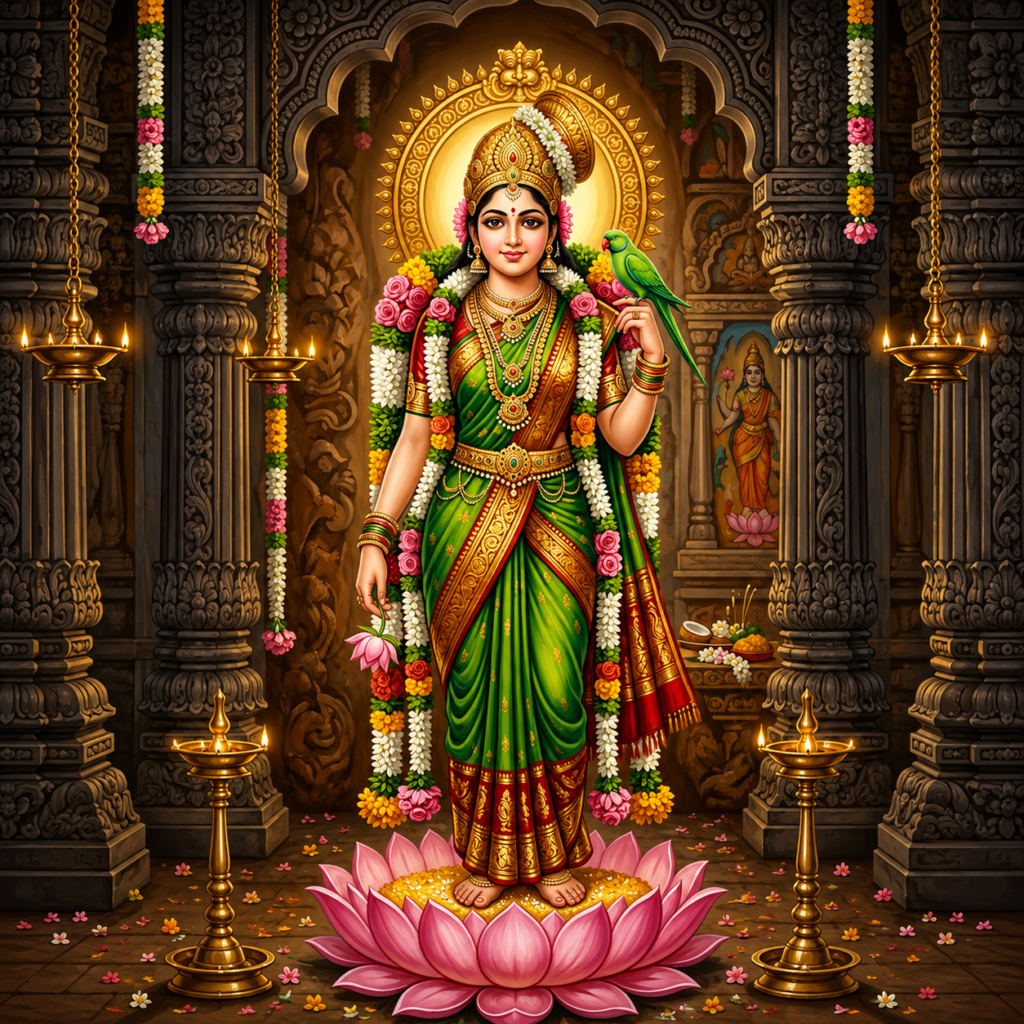
Goddess Andal, also known as Kodhai or Goda Devi, is one of the most celebrated female saints of the Sri Vaishnava tradition.
Traditional accounts describe Andal as having been found as a young child by Periyalvar, one of the twelve Alvars—the Tamil poet-saints devoted to Lord Vishnu.
Periyalvar raised Andal with devotion to Vishnu.
From an early age, Andal is traditionally described as having developed an intense spiritual love for Lord Vishnu and considered Him her divine beloved. Her life and poetry eventually became an important part of Sri Vaishnava devotional tradition.
Andal and Lord Vishnu
Andal’s devotion to Lord Vishnu is central to the spiritual meaning of Aadi Pooram. She is traditionally believed to have regarded Lord Vishnu as her divine husband and dedicated her life to Him. Her devotional works express:
- Love
- Surrender
- Faith
- Longing for the Divine
- Spiritual determination
- Complete devotion
For devotees, Andal’s life teaches that devotion is not merely about performing rituals. It is also about developing a sincere inner relationship with the Divine.
What Can You Do on Aadi Pooram 2026?
If you would like to observe Aadi Pooram 2026 at home, you can keep the practice simple.
A Simple Observance
- Clean your prayer space.
- Place an image of Goddess Andal.
- Light a lamp.
- Offer flowers or a garland.
- Prepare a simple vegetarian offering.
- Recite Tiruppavai or Andal’s prayers.
- Offer prayers to Lord Vishnu.
- Spend a few minutes in meditation or quiet reflection.
- Share prasadam with family.
- Consider an act of charity or service.
The goal is not to make the ritual complicated. Sincere devotion and understanding are central to the observance.
Aadi Pooram and Vedic Astrology
Although Aadi Pooram is primarily a religious and devotional observance rather than an astrology festival, its timing is connected with the Nakshatra system used in traditional Indian calendars.
The festival is associated with Pooram Nakshatra, also known as Purva Phalguni.
In Vedic astrology, Nakshatras are 27 divisions of the ecliptic associated with the Moon’s apparent movement.
Pooram is traditionally associated with themes such as:
- Creativity
- Relationships
- Celebration
- Comfort
- Generosity
- Beauty
These are traditional astrological interpretations and should not be treated as scientifically established personality or life predictions.
Learn more about the of Aadi Pooram 2026 Special Rituals:
https://www.sahasrararituals.in/specials/karya-siddhi-kamakhya-devi-homam-aadi-pooram-2026