Maha Mrityunjaya Homam: Significance, Benefits, Procedure & Who Can Perform It
Maha Mrityunjaya Homam is one of the most revered fire rituals associated with Lord Shiva. It is traditionally performed with the chanting of the Maha Mrityunjaya Mantra, also known as the Tryambaka Mantra or Mrityunjaya Mantra.
The practice has a deep place in Shaiva traditions and is traditionally associated with themes such as spiritual protection, overcoming fear, inner strength, healing prayers, and contemplation of mortality and impermanence.
The word Mrityunjaya is commonly understood as “victorious over death” or “conqueror of death.” Maha Mrityunjaya therefore refers to the great Mrityunjaya principle associated with Lord Shiva.
However, the traditional meaning of this expression should be understood carefully. The Maha Mrityunjaya Homam is a religious and spiritual practice, not a scientifically established method for preventing death, curing disease, or guaranteeing longevity.
In this comprehensive guide, we will explore the Maha Mrityunjaya Homam significance, benefits, procedure, mantra, spiritual meaning, appropriate participants, and the traditional reasons for performing this sacred Homa.
What is Maha Mrityunjaya Homam?
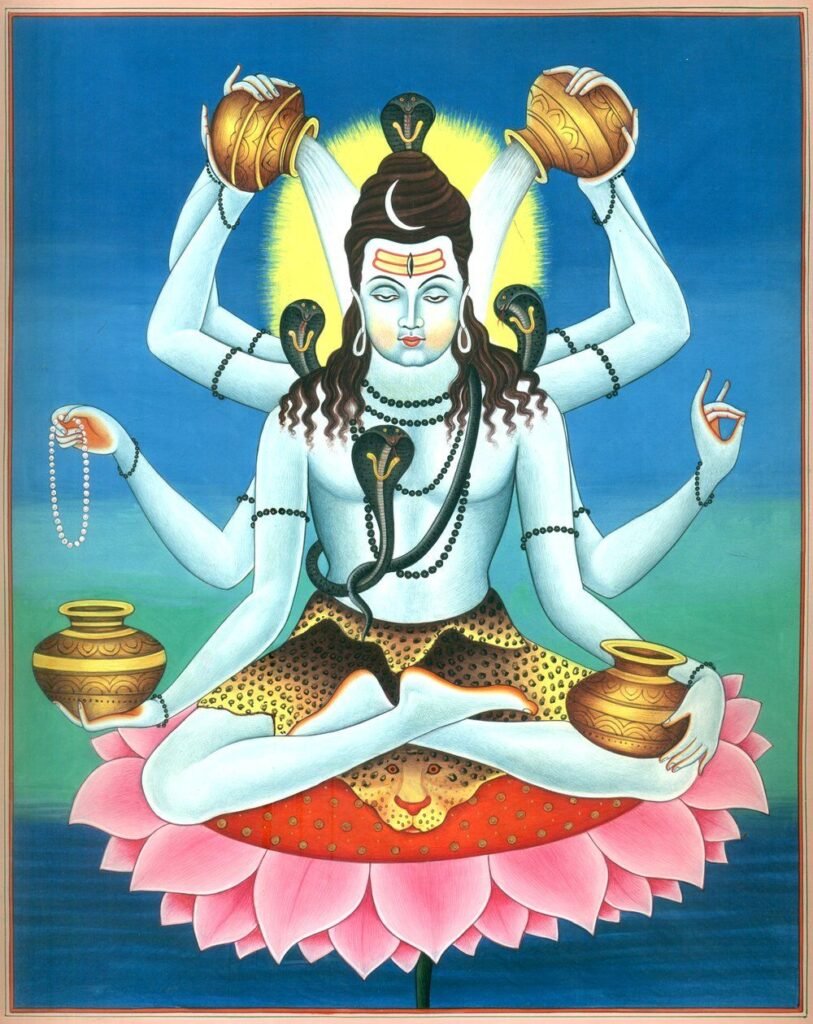
Maha Mrityunjaya Homam is a Vedic fire ritual performed with the recitation of the Maha Mrityunjaya Mantra and offerings into a sacred fire.
The ritual is dedicated to Lord Shiva in His Tryambaka or Mrityunjaya aspect.
The word Homam or Homa refers to a traditional fire offering in which prescribed substances are offered into Agni while mantras are recited.
Fire, or Agni, occupies an important position in Vedic ritual traditions. Agni is traditionally regarded as the medium through which offerings are presented during a Homa.
During a Maha Mrityunjaya Homam, the mantra is repeatedly chanted while appropriate offerings are made into the fire according to the ritual tradition being followed.
The purpose is traditionally devotional and spiritual.
It is often performed when a person or family wishes to pray for:
- Health and well-being
- Spiritual protection
- Inner strength
- Peace of mind
- Recovery and resilience
- Longevity
- Relief from fear
- Strength during difficult periods
- Blessings for a family member
- Spiritual purification
What is the Maha Mrityunjaya Mantra?
The central mantra of this Homa is the famous Maha Mrityunjaya Mantra, found in the Rig Veda and also appearing in other Vedic traditions.
The commonly recited form is:
Om Tryambakam Yajamahe
Sugandhim Pushtivardhanam
Urvarukamiva Bandhanan
Mrityor Mukshiya Maamritat
The mantra is traditionally addressed to Tryambaka, the three-eyed Lord Shiva.
The mantra has a profound spiritual meaning beyond the literal idea of physical death.
It can also be contemplated as a prayer for liberation from fear, attachment, ignorance and the limitations associated with mortal existence.
Meaning of the Maha Mrityunjaya Mantra
Understanding the mantra helps explain the Maha Mrityunjaya Homam significance.
“Om Tryambakam Yajamahe”
This refers to worshipping the three-eyed Lord Shiva.
The three eyes of Shiva are traditionally associated with deeper spiritual vision, awareness and knowledge.
The third eye is a recurring symbol in Shaiva philosophy representing wisdom that goes beyond ordinary perception.
“Sugandhim Pushtivardhanam”
This portion describes the Divine as possessing a beautiful fragrance and as one who nourishes and strengthens.
The imagery of fragrance suggests that spiritual influence can spread naturally, much like a pleasant fragrance.
“Urvarukamiva Bandhanan”
The mantra uses the imagery of a ripe fruit separating naturally from its attachment to the vine or stem.
This is a powerful metaphor for liberation.
“Mrityor Mukshiya Maamritat”
This is traditionally understood as a prayer for liberation from death while remaining connected with immortality.
At a spiritual level, the verse can be contemplated as a prayer for freedom from fear and bondage rather than interpreted as a promise of physical immortality.
Maha Mrityunjaya Homam Significance
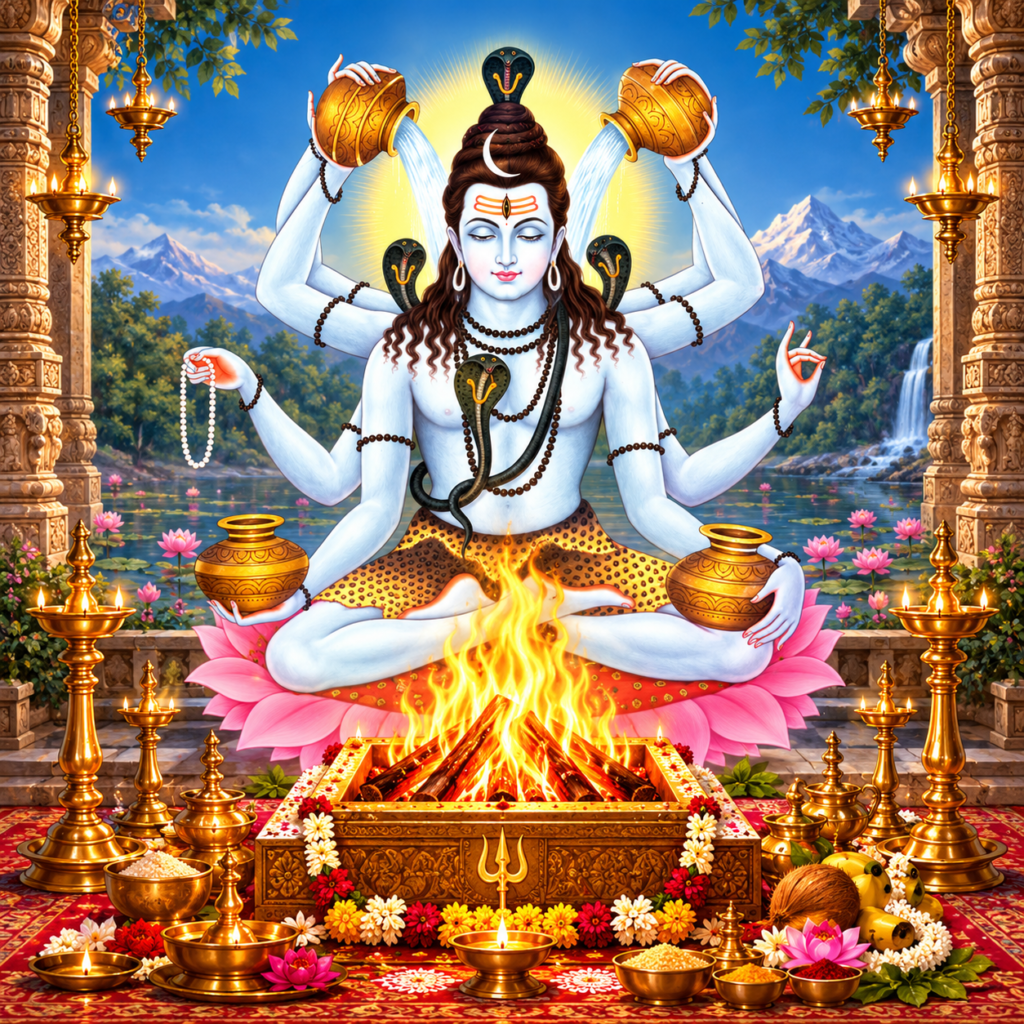
The Maha Mrityunjaya Homam significance comes from the combination of the sacred mantra, fire ritual, devotion to Lord Shiva and the philosophical theme of overcoming fear and mortality.
Several dimensions can be understood.
1. Devotion to Lord Shiva
The Homam is fundamentally an act of Shiva worship.
Devotees surrender their prayers to the Divine and seek spiritual strength.
2. Contemplation of Mortality
Human life is temporary, and the Mrityunjaya Mantra directly engages with the subject of death.
Rather than encouraging fear, the mantra can help devotees reflect on impermanence and the importance of meaningful living.
3. Spiritual Protection
Traditional Shiva worship often associates the Mrityunjaya principle with protection from fear and adverse circumstances.
This should be understood as a matter of faith rather than a guaranteed supernatural outcome.
4. Inner Strength
Participating in a disciplined ritual can provide an opportunity to cultivate courage, patience and surrender.
5. Prayer During Difficult Periods
Families sometimes perform the Homam when someone is facing a difficult phase of life.
The ritual provides a structured way for family members to come together in prayer.
Maha Mrityunjaya Homam Benefits
he Maha Mrityunjaya Homam Benefits are traditionally described in spiritual and devotional terms.
Commonly associated intentions include:
- Seeking divine protection
- Praying for health and well-being
- Developing inner courage
- Reducing fear
- Supporting spiritual discipline
- Seeking peace during challenging circumstances
- Praying for the well-being of family members
- Contemplating longevity and the value of life
- Strengthening devotion to Lord Shiva
- Developing acceptance and surrender
It is important to distinguish traditional beliefs from scientific evidence.
A Homam should not be presented as a substitute for medical treatment, emergency care, prescribed medication, professional counselling, or other appropriate forms of support.
When performed for someone experiencing illness, the ritual can coexist with proper medical care as a spiritual or devotional practice.
Maha Mrityunjaya Homam for Health
Maha Mrityunjaya Homam for health is one of the most common reasons devotees seek this ritual.
Traditionally, families may perform the Homam when someone is:
- Recovering from illness
- Experiencing a difficult health period
- Facing prolonged physical challenges
- Undergoing medical treatment
- Seeking emotional and spiritual support
- Praying for the well-being of an elderly family member
Therefore, a responsible spiritual approach is:
Prayer + appropriate medical care + emotional support + practical action.
Maha Mrityunjaya Homam for Protection
Maha Mrityunjaya Homam for protection is another traditional purpose.
Devotees may pray for protection from:
- Fear
- Accidents
- Difficult circumstances
- Uncertainty
- Emotional distress
- Perceived spiritual negativity
- Unexpected challenges
In traditional religious understanding, the mantra invokes the protective and transformative grace of Shiva.
Maha Mrityunjaya Homam for Longevity
The phrase Maha Mrityunjaya Homam for longevity is closely connected with the traditional meaning of the Mrityunjaya Mantra.
Devotees may perform the Homam with the prayer that a person receives strength, well-being and a meaningful life.
In traditional astrology and spiritual practice, the mantra is sometimes recommended in connection with concerns about longevity or difficult planetary periods.
Human longevity depends on many factors, including genetics, environment, lifestyle, healthcare and circumstances.
The spiritual meaning of the practice can instead be understood as a prayer for:
- Healthy living
- Strength
- Peace
- Courage
- Acceptance
- Spiritual awareness
- Freedom from excessive fear of mortality
Maha Mrityunjaya Homam for Family Members
A Maha Mrityunjaya Homam can be performed for an individual or family.
For example, a family may conduct the ritual with the intention of praying for:
- The health of a parent
- The well-being of a child
- The recovery of a family member
- The peace and strength of the household
- Spiritual protection
- General family well-being
The family can participate in chanting and offerings under the priest’s direction.
Such a ceremony can also become a meaningful collective spiritual experience.
When is Maha Mrityunjaya Homam Performed?
There is no single date on which everyone must perform the Maha Mrityunjaya Homam.
Devotees may perform it according to their spiritual tradition or personal circumstances.
Some people choose auspicious days associated with Lord Shiva, while others perform the Homa when there is a particular devotional intention.
Possible occasions include:
- Pradosham
- Mondays
- Maha Shivaratri
- Birthdays
- Nakshatra days
- Before or after major life events
- During periods of personal difficulty
- For family prayers
- During spiritual observances recommended by a qualified practitioner
When a ritual is recommended as an astrological remedy, the timing should ideally be determined from the individual’s birth chart by a competent Vedic astrologer rather than by applying a universal rule.
Maha Mrityunjaya Homam and Vedic Astrology
The Maha Mrityunjaya Mantra has a prominent place in traditional approaches to Vedic astrology remedies.
Some astrologers recommend Mrityunjaya Japa or Homa when a horoscope is traditionally interpreted as showing concerns related to health, vitality, obstacles or longevity.
However, astrology is a traditional belief system and does not have the same evidentiary basis as modern medical science.
Therefore:
- A horoscope should not be used to diagnose illness.
- A ritual should not replace medical treatment.
- Longevity should not be presented as something that can be guaranteed through a ritual.
- Astrological remedies should be presented as traditional spiritual practices.
- Serious health concerns should be discussed with qualified healthcare professionals.
A responsible Vedic astrology practice respects both spiritual tradition and evidence-based healthcare.
Learn more about the of Maha Mrityunjaya Homam:
https://www.sahasrararituals.in/remedial-services/pradosham-special-maha-mrityunjaya-homam
Frequently Asked Questions About Maha Mrityunjaya Homam
Can Maha Mrityunjaya Homam cure illness?
A Homam should not be presented as a cure for illness. It is a spiritual and devotional practice. Anyone experiencing a health condition should seek appropriate medical evaluation and treatment.
Is Maha Mrityunjaya Homam performed for longevity?
Yes. Longevity is one of the traditional intentions associated with Mrityunjaya worship. However, no ritual can guarantee a particular lifespan.
Who can perform Maha Mrityunjaya Homam?
Devotees can participate in the ritual. A formal Vedic Homa is generally best conducted by a qualified priest or Acharya trained in the relevant ritual tradition.
Can women participate in Maha Mrityunjaya Homam?
Yes, women can participate in Shiva worship and mantra recitation in many traditions. Rules concerning personally conducting a formal Vedic Homa vary by lineage and ritual tradition.
Can Maha Mrityunjaya Homam be performed at home?
A simple devotional practice can be performed at home, but a full Vedic Homa should preferably be conducted with appropriate knowledge, supervision and fire safety.
Can beginners chant the Maha Mrityunjaya Mantra?
The mantra is widely used in devotional practice. Beginners can learn it respectfully, paying attention to pronunciation and meaning. Those following a particular lineage should follow the guidance of their teacher.