What is Pradosham?
Pradosham is a sacred period observed on the Trayodashi Tithi (13th lunar day) during both the waxing phase (Shukla Paksha) and the waning phase (Krishna Paksha) of every lunar month.
Pradosham is one of the most sacred observances dedicated to Lord Shiva in the Hindu tradition. Falling twice every lunar month, this auspicious period is considered a special time for prayer, meditation, and seeking divine blessings through sincere devotion.
The word “Pradosham” refers not only to the day but also to a specific period around sunset that is considered especially auspicious for worshipping Lord Shiva and Goddess Parvati.
According to Hindu tradition, devotees believe that sincere prayers offered during Pradosham help cultivate inner peace, devotion, humility, and spiritual awareness.
Pradosham Meaning
The Pradosham Meaning comes from the Sanskrit word “Pradosha,” which refers to the twilight period just before and after sunset.
Traditionally, this time symbolizes the transition from day to night and is considered ideal for spiritual practices such as:
- Worship of Lord Shiva
- Meditation
- Chanting mantras
- Self-reflection
- Prayer
Spiritually, Pradosham reminds devotees to leave behind negative thoughts and move toward a life guided by righteousness, compassion, and wisdom.
The Story Behind Pradosham
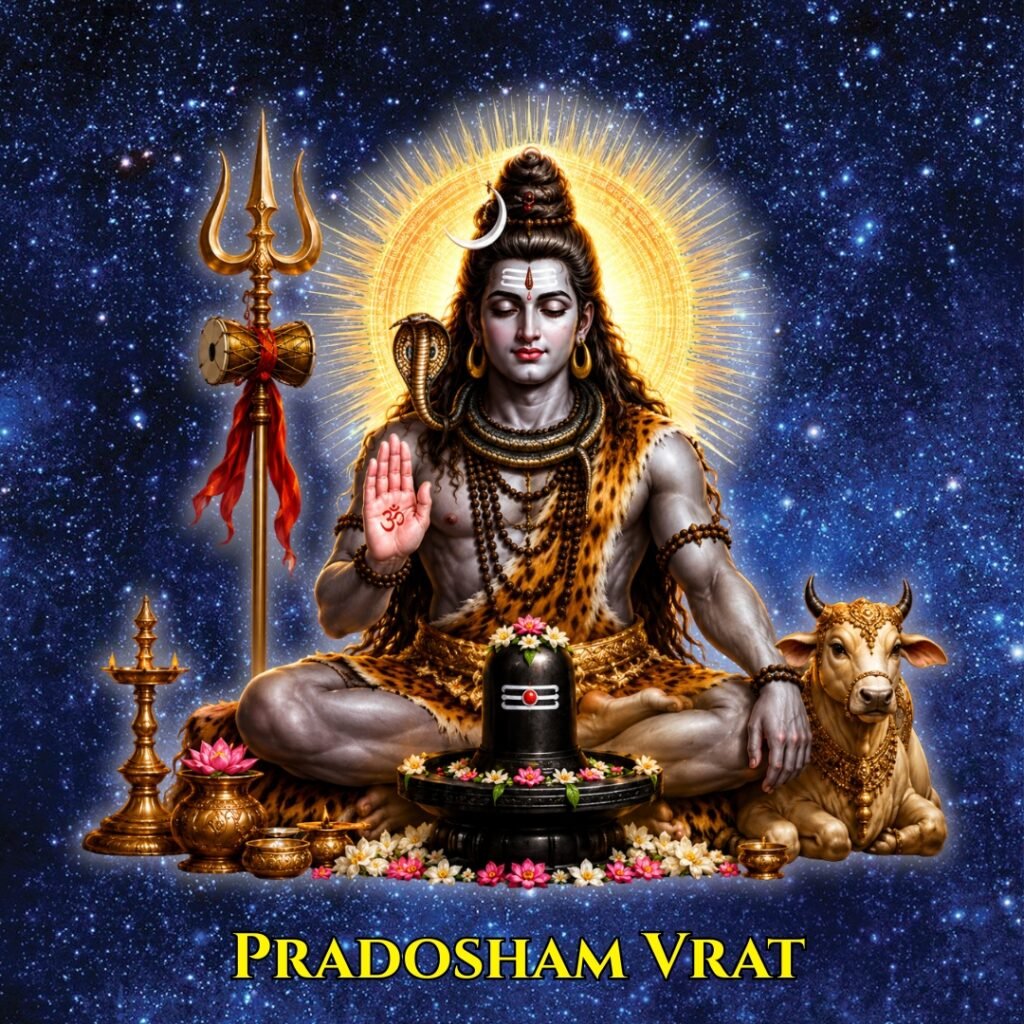
According to Hindu mythology, Pradosham is associated with the Samudra Manthan (Churning of the Ocean).
During this cosmic event, a deadly poison known as Halahala emerged from the ocean, threatening all creation. To protect the universe, Lord Shiva consumed the poison and held it in his throat, which turned blue and earned him the name Neelakantha.
The Devas are believed to have worshipped Lord Shiva during the Pradosham period, expressing gratitude and seeking his blessings. This traditional story forms the basis for the sacred observance of Pradosham.
Pradosham Significance
The Pradosham Significance lies in its emphasis on devotion, humility, and spiritual discipline.
For many devotees, Pradosham is an opportunity to:
- Strengthen devotion to Lord Shiva.
- Practice self-control through fasting.
- Seek forgiveness for mistakes.
- Cultivate compassion and gratitude.
- Spend time in meditation and prayer.
- Reflect on personal growth.
Rather than focusing solely on rituals, Pradosham encourages individuals to develop positive values and a deeper spiritual connection.
Pradosham Timing
One of the most frequently asked questions is about Pradosham Timing.
Pradosham is observed during the Trayodashi Tithi, but the most important period is the twilight around sunset, often referred to as the Pradosha Kala.
The exact timing varies each month because it depends on:
- The lunar calendar
- Local sunrise and sunset
- Geographic location
For this reason, devotees usually refer to a reliable Panchang (Hindu calendar) or their local temple for the correct Pradosham timings.
Types of Pradosham
Pradosham occurs twice every lunar month, resulting in approximately 24 observances each year.
Some of the commonly known forms include:
Soma Pradosham: Observed on a Monday and considered especially significant because Monday is traditionally associated with Lord Shiva.
Bhauma Pradosham: Observed on Tuesday.
Saumya Pradosham: Observed on Wednesday.
Guru Pradosham: Observed on Thursday.
Bhrigu Pradosham: Observed on Friday.
Shani Pradosham: Observed on Saturday and is widely observed by Shiva devotees.
Bhanu Pradosham: Observed on Sunday.
Each type is observed with devotion, though local traditions may attach special significance to certain weekdays.
How is Pradosham Observed?
The observance of Pradosham varies among families and regions, but common practices include:
Temple Visit
Many devotees visit Shiva temples during the Pradosha Kala to participate in special pujas and receive blessings.
Abhishekam
Priests perform ceremonial bathing (Abhishekam) of the Shiva Lingam using offerings such as:
- Water
- Milk
- Honey
- Curd
- Ghee
- Coconut water
These rituals are expressions of devotion and reverence.
Chanting
Common prayers include:
- Om Namah Shivaya
- Maha Mrityunjaya Mantra
- Shiva Ashtakam
- Shiva Chalisa
Meditation
Many devotees spend time in silent meditation to cultivate peace and mindfulness.
Pradosham Fasting
Pradosham Fasting is a voluntary spiritual practice observed by many devotees.
Depending on personal health, family traditions, and religious customs, devotees may choose to:
- Observe a complete fast.
- Consume fruits and milk.
- Eat one simple vegetarian meal.
- Avoid certain foods.
The purpose of fasting is to encourage discipline, mindfulness, and devotion rather than physical hardship.
Individuals with health conditions should follow medical advice before undertaking any fast.
Importance of Lord Shiva in Pradosham
Lord Shiva is regarded as the embodiment of compassion, transformation, and inner consciousness.
Pradosham worship reminds devotees to:
- Let go of ego.
- Practice forgiveness.
- Develop humility.
- Cultivate inner strength.
- Live with honesty and compassion.
These timeless teachings remain relevant regardless of one’s stage in life.
Pradosham in the Vedic Tradition
Within the broader Vedic tradition, Pradosham is viewed as a spiritually significant period for:
- Prayer
- Meditation
- Scriptural study
- Charity
- Self-improvement
Many devotees also participate in community worship at Shiva temples, strengthening both faith and social harmony.
Dos and Don’ts During Pradosham
Do’s
- Wake up early.
- Maintain cleanliness.
- Offer sincere prayers.
- Visit a Shiva temple if possible.
- Practice meditation.
- Help those in need.
- Maintain a peaceful mindset.
Don’ts
- Harsh speech.
- Anger and unnecessary arguments.
- Violence.
- Excessive indulgence.
- Disrespect toward elders or teachers.
These practices are intended to cultivate discipline and compassion.
Learn more about the of Soma Chandrasekhara Homam – Pradosham Special
https://www.sahasrararituals.in/remedial-services/soma-chandrasekhara-homam-pradosham