What is Rudrabhishekam? Complete Guide to Shiva Abhishekam
What is Rudrabhishekam?
Rudrabhishekam is a traditional Hindu ritual in which Lord Shiva, particularly in the form of a Shiva Lingam, is ceremonially bathed and worshipped while sacred mantras are recited. The word Rudra refers to a powerful form or aspect of Lord Shiva, while Abhishekam means ritual bathing or ceremonial offering of liquids to a deity.
Rudrabhishekam is especially associated with the chanting of the Sri Rudram, a revered Vedic hymn from the Krishna Yajurveda’s Taittiriya Samhita. During the ritual, offerings such as water, milk, curd, honey, ghee, fruits, sandalwood, Bilva leaves, and other traditional substances may be offered according to the particular tradition.
The central purpose of Rudrabhishekam is devotion, prayer, surrender, purification, and remembrance of Lord Shiva.
Many devotees perform this ritual on important occasions such as Mondays, Pradosham, Maha Shivaratri, birthdays, anniversaries, or other personally significant days. It may also be performed as part of temple worship or according to a family’s spiritual tradition.
In this complete guide, we will explore the Rudrabhishekam Meaning, Rudrabhishekam Significance, Rudrabhishekam Benefits, Lord Shiva Abhishekam, Rudrabhishekam Procedure, Rudrabhishekam Importance, traditional offerings, mantras, and common questions about the ritual.
Rudrabhishekam Meaning
To understand the Rudrabhishekam Meaning, it is helpful to understand the two words that make up the name.
Rudra
Rudra is a Vedic name associated with Lord Shiva. In the Sri Rudram, Rudra is invoked through numerous names and descriptions that recognize the Divine presence in different aspects of existence.
Rudra is associated with both fierce and benevolent dimensions of the Divine.
Abhishekam
Abhishekam means a ceremonial bathing or anointing of a deity.
During an Abhishekam, devotees offer sacred substances over the deity while reciting mantras and prayers.
Therefore, Rudrabhishekam can broadly be understood as:
A sacred Abhishekam performed as an offering to Lord Rudra or Lord Shiva, traditionally accompanied by Vedic chanting and devotional worship.
The ritual is not simply about pouring substances over a Shiva Lingam. The chanting, intention, discipline, devotion, and symbolic meaning are important parts of the observance.
What is Lord Shiva Abhishekam?
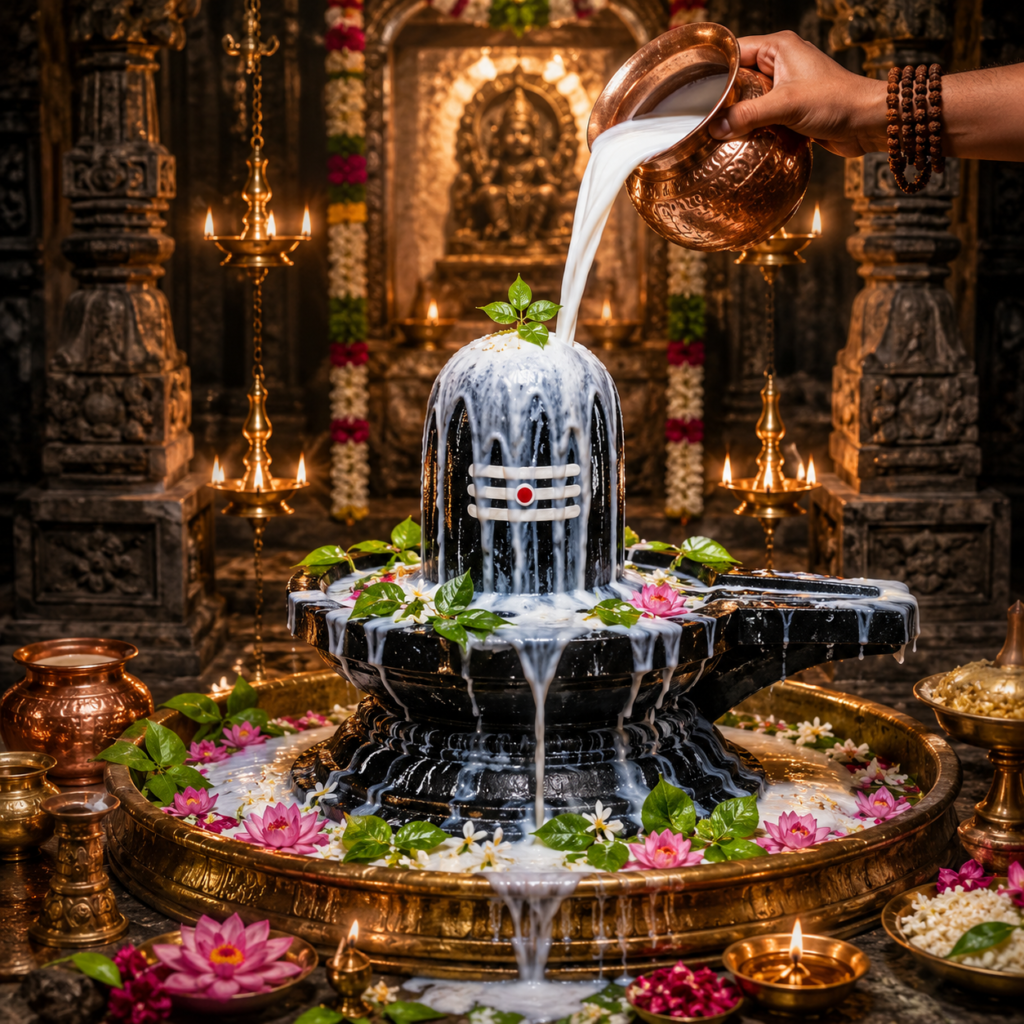
Lord Shiva Abhishekam refers to the broader practice of performing a ceremonial bathing ritual for Lord Shiva.
Rudrabhishekam is a particular form of Shiva Abhishekam that is traditionally associated with the recitation of Sri Rudram and related Vedic prayers.
Different temples and families may perform Shiva Abhishekam using different procedures.
Common substances include:
- Water
- Milk
- Curd
- Honey
- Ghee
- Sugar
- Coconut water
- Panchamrit
- Sandalwood water
- Bilva leaves
- Flowers
The materials used can vary according to the temple’s Agama tradition, local customs, family practice, and the specific Sankalpa.
Rudrabhishekam Significance
The Rudrabhishekam Significance comes from several interconnected aspects of Hindu worship.
Devotion to Lord Shiva
The primary purpose is to express devotion and reverence toward Shiva.
The ritual gives devotees a structured way to pray, chant, offer, and meditate.
Symbolic Purification
Water and other offerings are traditionally associated with purification.
The Abhishekam can therefore symbolize the purification of one’s thoughts, intentions, and actions.
Surrender
The act of offering sacred substances to Shiva represents humility and surrender before the Divine.
Vedic Chanting
Sri Rudram is central to many forms of Rudrabhishekam. Listening to or reciting the sacred verses becomes an important part of the spiritual practice.
Inner Reflection
The ritual creates an opportunity to slow down and focus attention on prayer instead of everyday distractions.
Why is Rudrabhishekam Performed?
Devotees perform Rudrabhishekam for different spiritual and personal reasons.
Some perform it as:
- A regular Shiva worship practice
- A prayer for peace
- A devotional observance on Mondays
- Part of Pradosham worship
- A Maha Shivaratri ritual
- A family tradition
- A prayer during an important life transition
- An expression of gratitude
- A Sankalpa-based spiritual practice
The intention can be as simple as:
“May I develop greater clarity, humility, devotion, and strength to perform my responsibilities well.”
This approach keeps the ritual focused on spiritual growth rather than treating it as a guaranteed method of obtaining a particular material result.
Rudrabhishekam and Sri Rudram
One of the most important features of traditional Rudrabhishekam is the chanting of Sri Rudram.
Sri Rudram is found in the Taittiriya Samhita of the Krishna Yajurveda and is traditionally divided into two major sections:
- Namakam
- Chamakam
The Namakam repeatedly uses forms of Namah, expressing reverence and salutation to Rudra.
The Chamakam contains prayers traditionally asking for various forms of nourishment, strength, well-being, and completeness.
Because Vedic chanting requires correct pronunciation, rhythm, and intonation, elaborate Rudrabhishekam performed in temples is often conducted by trained priests.
For a person who is unfamiliar with Vedic chanting, it is perfectly reasonable to participate by listening respectfully and following the instructions of the priest.
Why are Bilva Leaves Offered to Lord Shiva?
Bilva, also known as Bael, has a special place in Shiva worship.
A Bilva leaf typically has three leaflets, and Hindu traditions have associated this tripartite form with various sacred triads.
The Bilva tree itself is considered sacred in Shiva traditions.
Devotees commonly offer Bilva leaves while chanting Shiva mantras.
The practice represents devotion and reverence rather than a guaranteed mechanism for producing a particular worldly result.
Is Rudrabhishekam Help Reduce Stress?
Many people find prayer, chanting, meditation, and structured spiritual practices calming.
A Rudrabhishekam can provide a quiet period away from ordinary routines and encourage focused attention.
The atmosphere of a temple, rhythmic chanting, devotional music, and participation in a familiar religious tradition may be meaningful to devotees.
However, it would be inaccurate to claim that Rudrabhishekam scientifically cures stress or mental-health conditions.
Spiritual practice may complement a person’s overall well-being, but it should not replace appropriate professional care when someone is experiencing a health concern.
When is Rudrabhishekam Performed?
Rudrabhishekam can be performed at different times depending on family and temple traditions.
Common occasions include:
Mondays
Monday is traditionally associated with Lord Shiva and is a popular day for Shiva worship.
Pradosham
Pradosham is a twice-monthly Shiva observance associated with the Trayodashi Tithi.
Many Shiva temples conduct special worship during the Pradosha period.
Maha Shivaratri
Maha Shivaratri is one of the most important occasions for Shiva worship.
Abhishekam and Rudra-related chanting are commonly performed in temples and homes.
Shravan Month
In regions and traditions where the month of Shravan is especially dedicated to Shiva, devotees may perform Abhishekam regularly.
Personal Occasions
Some families perform Rudrabhishekam for birthdays, anniversaries, new beginnings, or as part of a personal Sankalpa.
The appropriate timing depends on the devotee’s tradition and the purpose of the worship.
Rudrabhishekam During Maha Shivaratri
Maha Shivaratri is closely associated with Shiva worship, night-long prayers, and Abhishekam.
Many temples perform multiple Abhishekams during the four traditional night periods or Praharas.
Devotees may participate in:
- Shiva Abhishekam
- Rudram chanting
- Bilva Archana
- Mantra Japa
- Meditation
- Fasting
- Night-long worship
Maha Shivaratri provides an especially meaningful setting for contemplating the spiritual symbolism of Shiva.
Rudrabhishekam vs. Abhishekam: What is the Difference?
The terms are related but are not always interchangeable.
Abhishekam is the general practice of ceremonially bathing a deity.
Shiva Abhishekam is Abhishekam specifically performed for Lord Shiva.
Rudrabhishekam is a specific form of Shiva worship traditionally involving Rudra-related Vedic chanting, particularly Sri Rudram.
Therefore:
Every Rudrabhishekam is an Abhishekam, but not every Shiva Abhishekam is necessarily a formal Rudrabhishekam.
The exact distinction can vary in everyday temple usage.
Learn more about the of Rudrabhishekam & Maha Abhishekam:
https://www.sahasrararituals.in/remedial-services/krishna-paksha-maha-pradosham-rudrabhishekam-abhishekam