Krishna Jayanthi 2026: Date, Timings, Puja, Fasting, Significance & Rituals
What is Krishna Jayanthi / Janmashtami?
Krishna Jayanthi / Janmashtami is one of the most important Hindu festivals dedicated to Lord Krishna, the eighth incarnation of Lord Vishnu according to Vaishnava tradition. The festival commemorates the divine birth of Krishna on the Ashtami Tithi of Krishna Paksha during the month of Bhadrapada.
The festival is observed with devotion, fasting, midnight worship, devotional singing, storytelling, temple visits, and the decoration of Bala Gopal, the child form of Lord Krishna.
This article explains the Krishna Janmashtami 2026 Date, Puja timings, fasting, Janmashtami Puja Vidhi, spiritual significance, rituals, traditional beliefs, and ways to celebrate the festival at home.
When is Krishna Jayanthi 2026?
Krishna Janmashtami 2026 will be celebrated on Friday, September 4, 2026.
Krishna Jayanthi 2026 falls on Friday, September 4, 2026. In Chennai, the Nishita Puja period is approximately 11:45 PM on September 4 to 12:31 AM on September 5. The Ashtami Tithi begins at approximately 2:25 AM on September 4 and ends at 12:13 AM on September 5, while Rohini Nakshatra begins around 12:29 AM on September 4 and ends around 11:04 PM.
The exact Janmashtami observance can differ between locations and traditions. Therefore, devotees should consult a location-specific Panchang when planning the puja or determining the fasting-breaking time.
Krishna Jayanthi 2026 at a Glance
| Detail | Information |
| Festival | Krishna Jayanthi |
| Year | 2026 |
| Date | Friday, September 4, 2026 |
| Main Deity | Lord Krishna |
| Tithi | Krishna Paksha Ashtami |
| Important Nakshatra | Rohini |
| Dahi Handi | Saturday, September 5, 2026 |
| Chennai Nishita Puja | Approx. 11:45 PM – 12:31 AM |
The Chennai timings above are location-specific. Other Indian cities have slightly different Nishita timings because sunrise, sunset, and local astronomical calculations vary by location.
Why is Krishna Jayanthi / Janmashtami Celebrated?
Krishna Jayanthi /Janmashtami is celebrated to commemorate the birth of Lord Krishna.
According to Hindu tradition, Krishna appeared in the world during a period of severe injustice and oppression. His birth story is closely connected with the tyrannical rule of King Kamsa, who feared a prophecy that Devaki’s eighth child would become the cause of his downfall.
Krishna’s birth is therefore traditionally understood as a divine response to the decline of righteousness.One of the most widely known teachings associated with Krishna appears in the Bhagavad Gita, where the Divine explains the restoration of dharma when righteousness declines.
For devotees, Janmashtami therefore represents themes such as:
- Dharma
- Divine wisdom
- Hope
- Devotion
- Compassion
- Protection of righteousness
- Victory over injustice
Lord Krishna Jayanthi: The Birth Story
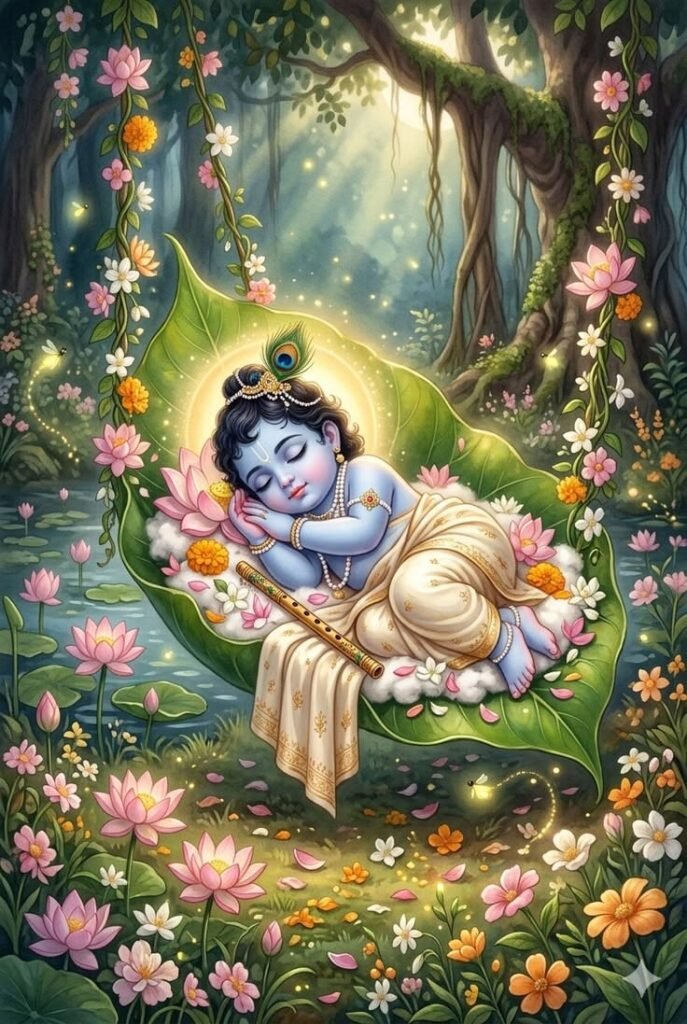
The story of Lord Krishna Jayanthi begins with Devaki and Vasudeva.
Devaki was the sister of Kamsa, the ruler of Mathura. According to traditional accounts, Kamsa learned through a divine prophecy that Devaki’s eighth child would become responsible for his downfall. Fearing the prophecy, Kamsa imprisoned Devaki and Vasudeva.
Their first several children were killed by Kamsa according to the traditional narrative. When the eighth child was born, however, extraordinary events unfolded. Vasudeva was instructed to take the infant across the Yamuna River and bring him to Gokula, where Nanda and Yashoda lived.
Despite the dangerous circumstances, Vasudeva successfully carried the child to safety.
Krishna was then raised in Gokula and Vrindavan, where his childhood became the foundation for some of the most beloved stories in Hindu devotional literature.
The Spiritual Meaning of Krishna’s Birth
The Janmashtami Spiritual Significance is not limited to remembering a historical or mythological event.
For devotees, Krishna’s birth symbolizes the appearance of divine consciousness in a world affected by fear, injustice, and confusion. The festival can therefore be understood at several levels.
Birth of Hope: Krishna’s arrival represents hope during a difficult period.
Restoration of Dharma: His life is traditionally associated with protecting righteousness and guiding people toward dharma.
Divine Love: The stories of Krishna and his devotees are central to Bhakti traditions.
Wisdom: Krishna’s teachings in the Bhagavad Gita address duty, action, devotion, knowledge, and spiritual understanding.
Inner Transformation: For many spiritual practitioners, Janmashtami is an opportunity to reflect on how divine qualities can be cultivated within one’s own life.
Who is Lord Krishna?
Lord Krishna is one of the most widely worshipped deities in Hinduism. In many Vaishnava traditions, Krishna is regarded as the Supreme Personality of Godhead, while other traditions understand him as an incarnation or manifestation of Lord Vishnu. Krishna is known through several important stages and aspects of his life.
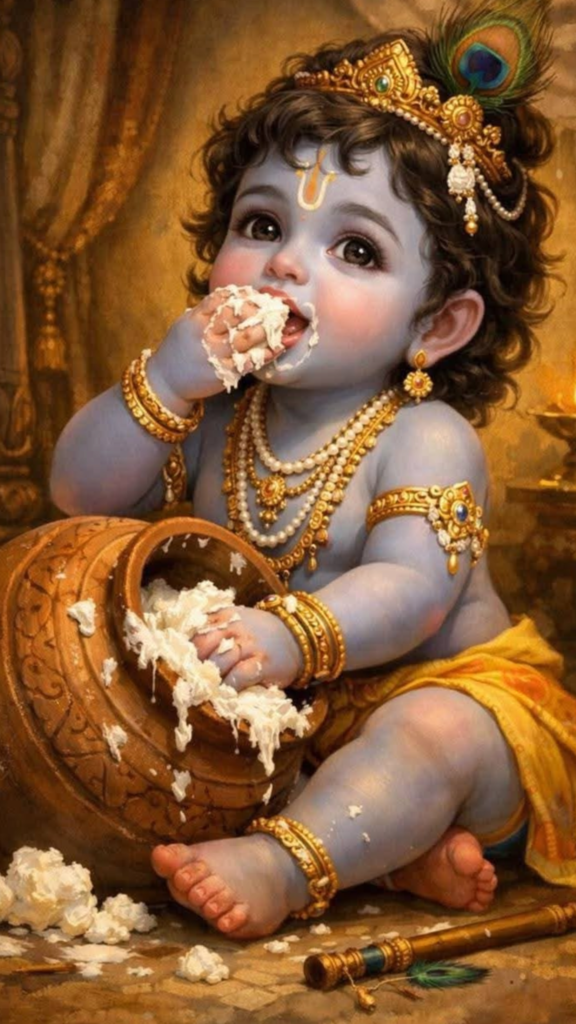
Krishna as a Divine Child: The child form of Krishna, commonly called Bal Krishna or Bal Gopal, is especially popular in household worship.
Krishna of Vrindavan: Stories of Krishna’s childhood in Vrindavan emphasize his playful nature, relationships with the Gopas and Gopis, and devotion associated with Radha and Krishna.
Krishna as the Teacher: In the Bhagavad Gita, Krishna serves as Arjuna’s guide and explains important spiritual principles concerning duty, action, devotion, and knowledge.
Krishna as a King and Statesman: Later traditions describe Krishna’s role in Mathura and Dwaraka and his involvement in the events surrounding the Mahabharata.
Jayathi Janmashtami Spiritual Significance
The Jayanthi Janmashtami Spiritual Significance can be understood through the qualities associated with Krishna’s life and teachings.
Dharma
Krishna’s teachings emphasize performing one’s responsibilities with awareness and dedication.
Bhakti
Devotion or Bhakti is one of the central themes associated with Krishna worship.
Detachment
The Bhagavad Gita teaches the importance of performing one’s duties without excessive attachment to the results.
Compassion
Krishna’s teachings and stories encourage devotees to develop compassion and understanding.
Inner Strength
Krishna’s life is traditionally seen as an example of responding to challenges with wisdom and courage.
These teachings can be approached as spiritual principles rather than promises of specific material results.
Krishna Jayanthi / Janmashtami Fasting
Janmashtami / Jayanthi fasting is an important part of the festival for many devotees. The type of fast varies. Some devotees observe a strict fast, while others consume fruits, milk, or specific fasting foods.
Traditional fasting practices may include avoiding:
- Grains
- Rice
- Wheat
- Pulses
- Certain vegetables
- Regular cooked meals
Is Janmashtami Fasting Compulsory?
No. Fasting is a devotional practice, and not every person needs to observe the same type of fast. Children, elderly people, pregnant women, people with medical conditions, and those taking medication should not undertake strict fasting without appropriate medical guidance.
A simple vegetarian or sattvic diet combined with prayer can also be a meaningful way to observe the festival. The spiritual value of fasting is traditionally associated with discipline and devotion rather than physical suffering.
Traditional Spiritual Significance of Janmashtami
Devotees traditionally associate Janmashtami with several spiritual themes.
Overcoming Fear
The story of Krishna’s birth takes place under conditions of fear and imprisonment. His arrival symbolizes hope.
Protection of Dharma
Krishna’s life is associated with the protection of righteousness.
Devotion
The relationships between Krishna and his devotees are central to Bhakti traditions.
Wisdom
The Bhagavad Gita presents Krishna as a spiritual teacher.
Surrender
Many devotional traditions emphasize surrendering one’s ego and placing trust in the Divine.
These interpretations are religious teachings and should not be presented as guaranteed solutions to personal problems.
Janmashtami and Vedic Astrology
The festival is determined through the Hindu lunar calendar and therefore involves Tithi and Nakshatra calculations. Krishna’s birth is traditionally associated with:
- Krishna Paksha
- Ashtami Tithi
- Rohini Nakshatra
- Midnight
In Jyotisha, the Moon is traditionally associated with the mind, emotions, memory, sensitivity, and mental impressions. Rohini is one of the 27 Nakshatras and has an important place in Vedic astrology.
However, religious festival calculations and individual horoscope interpretation are different matters. A person’s birth chart cannot be interpreted merely from the fact that Janmashtami occurs under a particular Tithi or Nakshatra.
How to Celebrate Krishna Janmashtami 2026 at Home
A simple home celebration can be both meaningful and manageable.
Morning
- Clean the house.
- Decorate the puja area.
- Prepare Bal Gopal’s clothing.
- Arrange flowers and offerings.
- Begin the fast if following a fasting tradition.
- Read about Krishna’s life.
Afternoon
- Prepare Naivedyam.
- Decorate the Krishna idol.
- Prepare the Jhula.
- Spend time in prayer or devotional singing.
Evening
- Light lamps.
- Chant Krishna mantras.
- Read the Bhagavad Gita or Krishna’s birth story.
- Join a temple Bhajan or online devotional program if desired.
Learn more about the of Krishna Jayanthi / Janmashtami Rituals:
https://www.sahasrararituals.in/remedial-services/krishna-janmashtami-2026-sri-krishna-sudarshana-homam